The Stiftung für Zukunftsfragen’s 2026 Tourism Analysis, commissioned by British American Tobacco, found that German travel behavior was particularly resilient during the 2025–2026 period. Research shows that Greece is the most expensive destination for German tourists, with an average cost of €147 per day.


Despite economic pressures, geopolitical tensions, and increased cost of living, tourism remains central to the way of life of citizens, with Greece being among the most expensive European destinations and facing strong pressure on the cost side.



In 2025, almost two-thirds of Germans (64%) took at least one five-day trip, the second-highest rate in the past twenty years. At the same time, the frequency of travel increased significantly: 44% of citizens traveled more than once within the year, when ten years ago the corresponding rate was only 15%. This trend is directly linked to income, as high-income earners are almost four times more likely to take multiple trips compared to lower-income groups.
In terms of duration, the average stay of Germans on their vacations remained close to 13 days in 2025, a level comparable to that of previous years. Over a period of two decades, the duration of trips appears to be remarkably stable, with the only significant deviation being the first year of the pandemic. The differences are mainly due to the destination: trips within Germany are clearly shorter, while longer distances are associated with extended stays. Within Europe, the picture is generally homogeneous, with the exception of Turkey – where the length of stay exceeds the average by about four days – and Austria, which records shorter stays due to its character as a nearby and short-term destination.
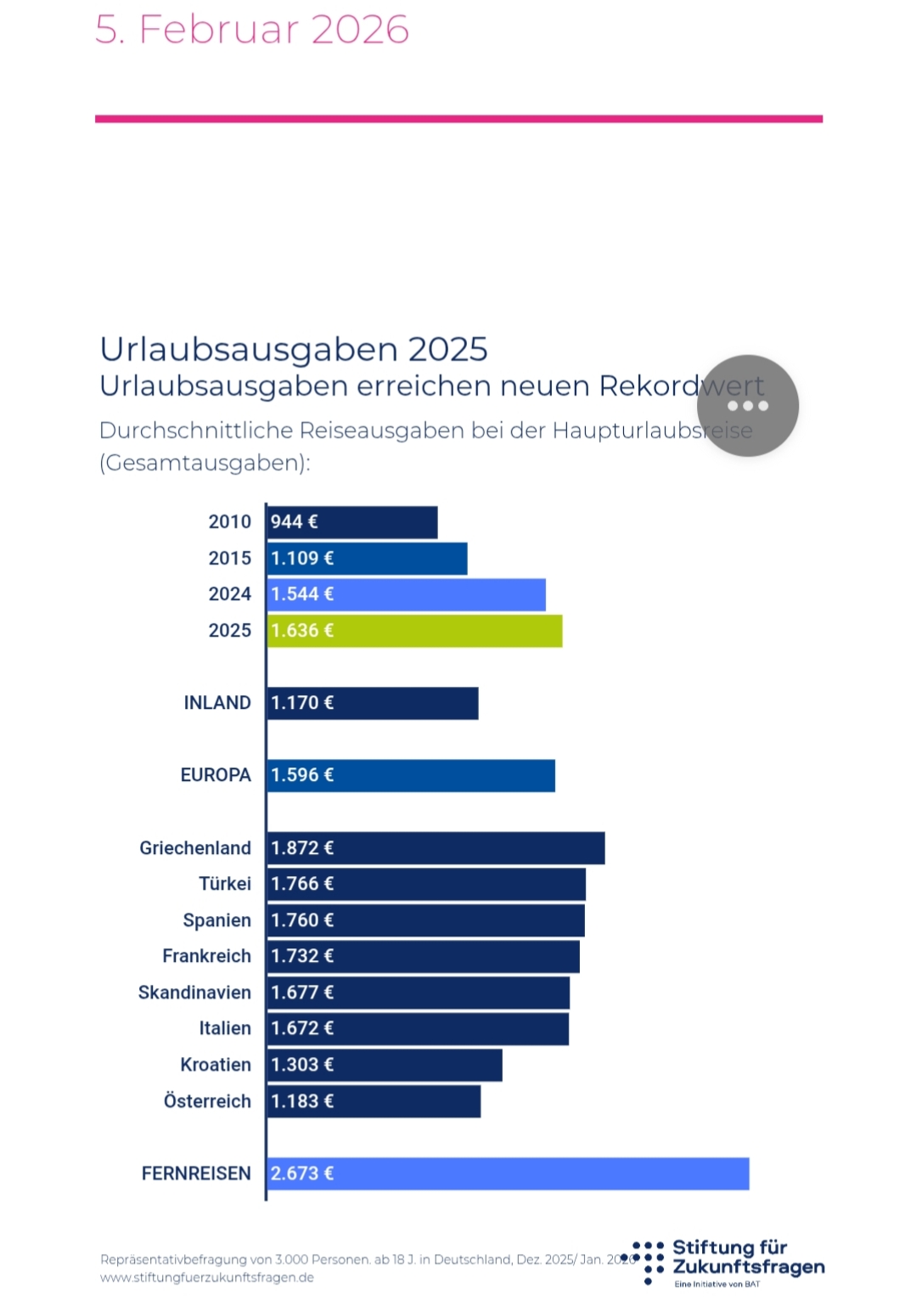
Significant changes are being recorded in the cost of vacations. In 2025, the average expenditure for the main annual travel destination was €1,636 per person, an increase of almost €100 compared to the previous year and more than €500 compared to 2015. Meanwhile, daily expenses reached a record high of 130 euros per person per day.
Greece is recorded as the most expensive destination among the countries included in the analysis, with a daily cost of 147 euros, even higher than several distant destinations. Spain follows with €143, while Turkey and Croatia are at lower levels, and in fact appear to be cheaper on an annual basis. The increase in costs in Greece and Spain is partly due to the rise in airfares.
Despite the rise in prices, Germans remain eager to spend more on their vacations. According to the analysis, consumers are willing to limit daily expenses or postpone larger purchases in order to maintain the quality, level of service, and travel experience.
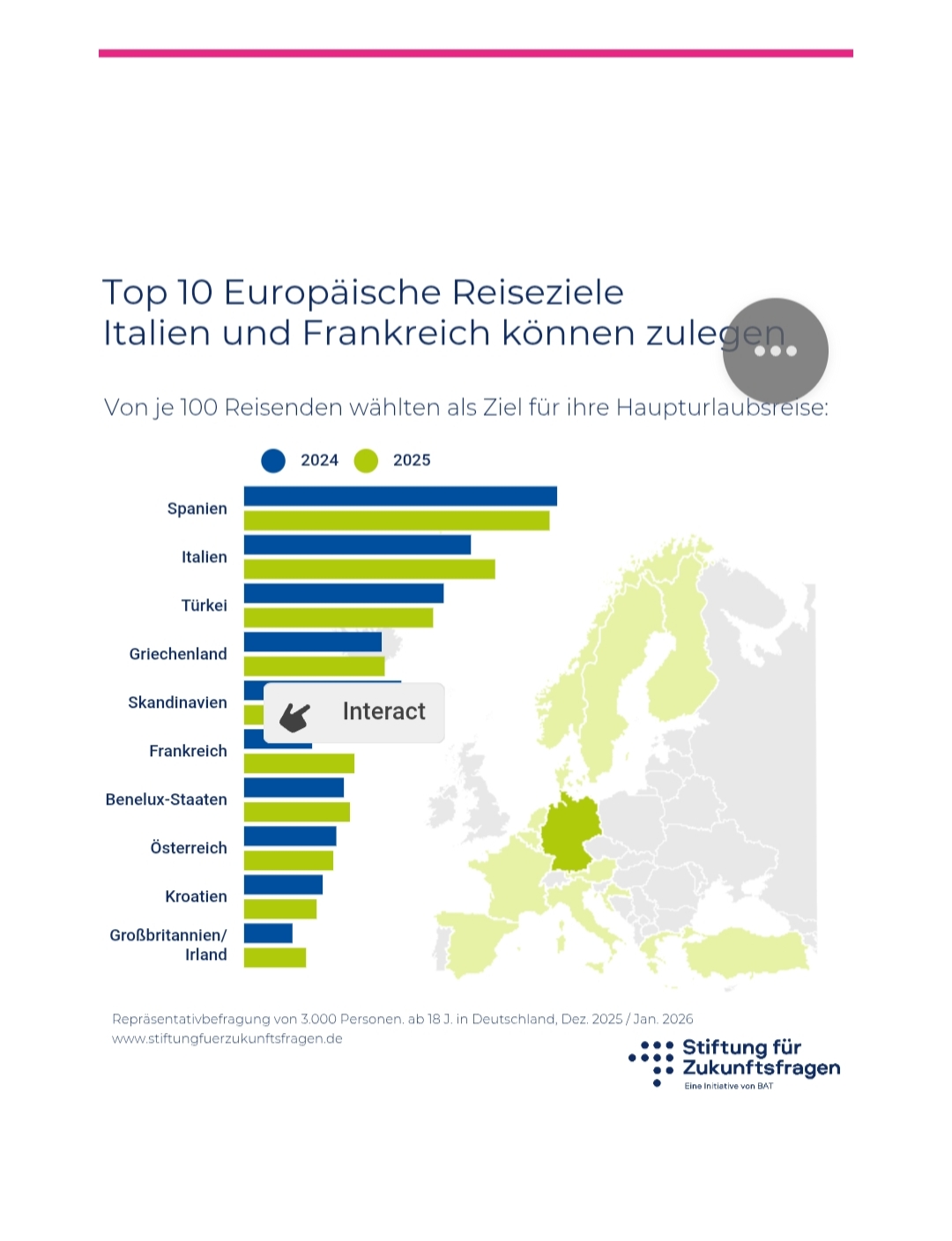
In terms of destinations, Spain maintained its top spot in 2025 as the primary choice for Germans for their main annual destination, with a share of over 9%. Italy solidified its second place, while both Italy and France saw an increase in their shares. This development is not solely due to geographical proximity or accessibility by car, but is linked to the increased demand for destinations that combine gastronomy, cultural proximity, and a sense of everyday quality of life.
Travel sentiment remains strong for 2026. Already two-thirds of Germans say they are certain to take at least one trip within the year, while the percentage of those who appear undecided is steadily decreasing compared to the previous decade. One in five plans a trip outside of Europe – the highest percentage recorded to date – while Mediterranean destinations are expected to receive an increased number of visitors once again. Germany, on the other hand, is expected to see slightly lower demand compared to the previous year.

According to Ulrich Reinhardt, the scientific director of the Stiftung für Zukunftsfragen, increased travel frequency and early decision-making on vacations serve as a key mechanism for balancing daily pressure, with vacation planning becoming particularly important as early as the winter months.
Source: Stiftung für Zukunftsfragen, Tourism Analysis 2026 (Press Conference 05.02.2026)