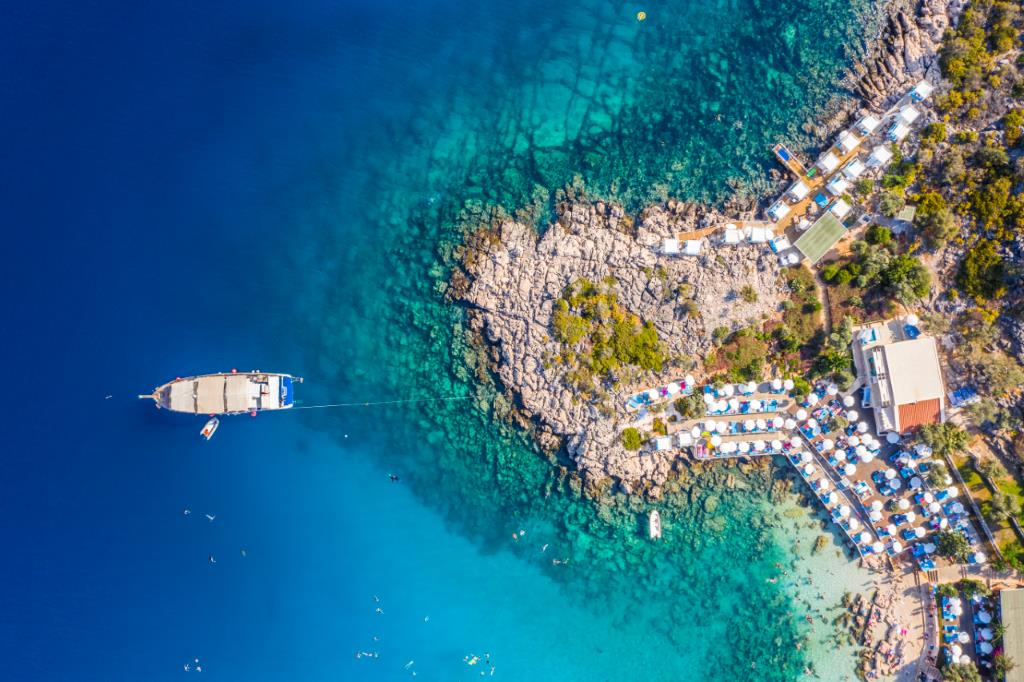
With bookings at a standstill in Turkey this summer, the country’s hoteliers appear increasingly keen on price reductions and other offers in an attempt to reset the market, according to a survey conducted by German travel website touristik aktuell among German travel agents.


MONEY & TOURISM has in many reports highlighted the concerns about the current tourist season in Turkey, while in the last issue of M&T, “MASKA” pointed out: “…But the one that seems to have a serious problem as the season progresses is Turkey, where bookings are not taking off at the expected pace, a fact that is a serious concern for hoteliers. The earthquakes in Istanbul and the rise in prices are the two reasons cited by most people, but they are hardly likely to be mitigated, at least in the immediate future.


It is a fact that, prices for holidays in Turkey have risen sharply in recent years, with the managing director of tour operator, Schmetterling, Ömer Karaca, making the accusations while speaking at the annual conference of the travel agency cooperation, held in Bodrum, Turkey. He said the cost of a 13-day holiday, on an all-inclusive basis, at the Diamond Princess hotel in Manavgat, for example, has risen from €1,337 per person in August 2022 to €1,878 in August 2024. “And we’re talking about the exact same room,” he said emphatically.
Tour operators are attracted to lower class hotels
So far, tour operators have reacted to the price increases mainly by adjusting their hotel portfolios. “We have specifically included in our programme resorts that appeal to families with a more limited economic dynamic,” explains Alexander Wrede, buyer of Alltours, citing as examples the Alltoura Club Hotel La Benata and Hotel Silver in Sidi, as well as the Mary Hotel in Alanya.
Both Alltours and other tour operators are increasingly focusing on second- and third-tier resorts, particularly in the Sidis and Alanya areas.
TUI, on the other hand, has significantly expanded its three-star segment and has made “attractive discounts for children” with several hotel chains in Turkey.
This also applies to other tour operators, such as Turkey specialist Bentour, which has also launched its first “Money for Holidays” campaigns with some hoteliers.
Schauinsland-Reisen is the first tour operator in the German market to offer the All-inclusive Light product on the Turkish Riviera, which includes all meals and drinks, but no alcohol.
The programme, which is initially available at three hotels, offers travellers the opportunity to save up to 50 euros per person per week.
The response from competing tour operators has been mixed, with Sebnem Iscen, head of product at Anex Tour, appearing sceptical as costs are not being reduced to the desired extent, while Coral Travel, on the other hand, sees this as a flexible way to continue to offer customers attractive prices.
Holiday airlines extend their offer for Turkey
Airlines are optimistic that demand for Turkey will pick up in the process, despite increased prices in the country. Market leader Sun Express, a joint venture between Lufthansa and Turkish Airlines, has increased capacity on routes from German-speaking markets to Antalya by 12% to mark the airline’s 35th anniversary.
“We are seeing strong pre-bookings for the summer with a 20% increase compared to last year,” says the carrier’s CEO Max Kownatzki.
Freebird Airlines, which is celebrating its 25th anniversary, is also expanding its operations. “We have allocated about 110,000 additional seats to the market,” said marketing director Tugba Güner. New routes have been added from Memingen and Wiese to Antalya and a second flight a week from Düsseldorf to Dalaman.
Corendon Airlines, however, is acting more cautiously. The airline, which is celebrating its 20th anniversary, has not increased its capacity compared to last year and is focusing on “stable, flight operations,” according to a statement.
Declining arrivals in 3 months
However, in the first three months of 2025, Turkey welcomed a total of 6.7 million foreign tourists, down 5% year-on-year, with Iranians topping the list of foreign visitors (733,000), down slightly by 2%, followed by Russians, down 12% to 601,000, and an even greater decline in the number of Germans visiting Turkey – down 17% to 572,000.
However, according to Engin Ceylan, from the Turkish Tour Operators Association (TÜRSAB), an increase in the number of tourists from markets such as China, Germany and the UK is predicted.