After a sluggish start to the summer tourist season, Turkey’s tourism industry has regained its momentum and is on track to meet its ambitious target of $63 billion in tourism revenue by 2025, according to the president of the Turkish Tourism Investors Association (TTYD), Oya Narin.


Ms. Narin noted that the industry started the year strongly, but slowed temporarily due to global challenges, including the ongoing conflict between Russia and Ukraine. However, by June, the industry had recovered, with strong activity observed in the second and third quarters.


From January to August, Turkey welcomed 35.5 million foreign visitors, a slight decrease of 0.9% compared to the previous year. If Turkish citizens residing abroad are included, the total number of arrivals reached 40.45 million in the eight-month period of 2025, according to TTYD data. Meanwhile, revenue increased by 7.6% year-over-year, reaching $25.8 billion in the first half of the year.
“Last year, tourism revenue reached $61 billion. This year, we expect it to reach $63 billion, according to the government’s medium-term program,” Ms. Narin said. She added: “Over the past decade, while global tourism has increased by about 40%, the tourism sector in Turkey has seen a nearly 90% increase, which is double the rate. This is a remarkable achievement that we are proud of.”
Referring to 2026, she said that the industry is already preparing, with several contracts being finalized a year earlier.
She emphasized the important role of Istanbul and Antalya in Turkish tourism, describing them as “global cities” that have become magnets for international travelers. Attaleia, he said, once a moderate seaside destination, has become a Mediterranean power, with more than 600,000 beds and world-class infrastructure.
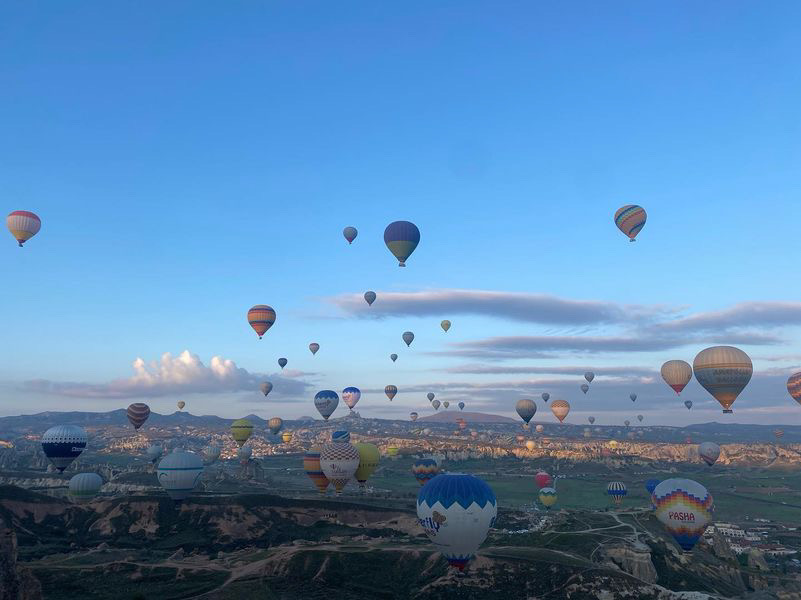
Ms. Narin also emphasized the importance of diversifying the tourism offer. “Cappadocia, with its iconic hot air balloons and unique landscapes, has become a must-see for international visitors, often in combination with trips to Istanbul and Bodrum. Cappadocia is a wonder of the world,” she said, stressing the need to maintain the quality of tourism, combined with the increase in occupancy.
According to her, European travelers remain the cornerstone of the Turkish tourism industry, with many visiting multiple times a year.
Ms. Narin emphasized the importance of offering attractive packages to maintain this demand. She also pointed out the growing strength of domestic tourism, which she described as one of Turkey’s greatest advantages.
“Global tourism will continue to grow and we must be ready, with the right infrastructure, human resources, and financial models,” Ms. Narin emphasized. She added, “Turkey is now ranked fourth among the world’s tourism markets. To remain in the top five, we must continue to work closely with the government, the ministry, and industry stakeholders.”