-Strategic alliance in Rhodes with the leadership of the TUI Group and the TUI Care Foundation


-DEI’s entry into green mobility and progress on flagship Rhodes Co-Lab projects
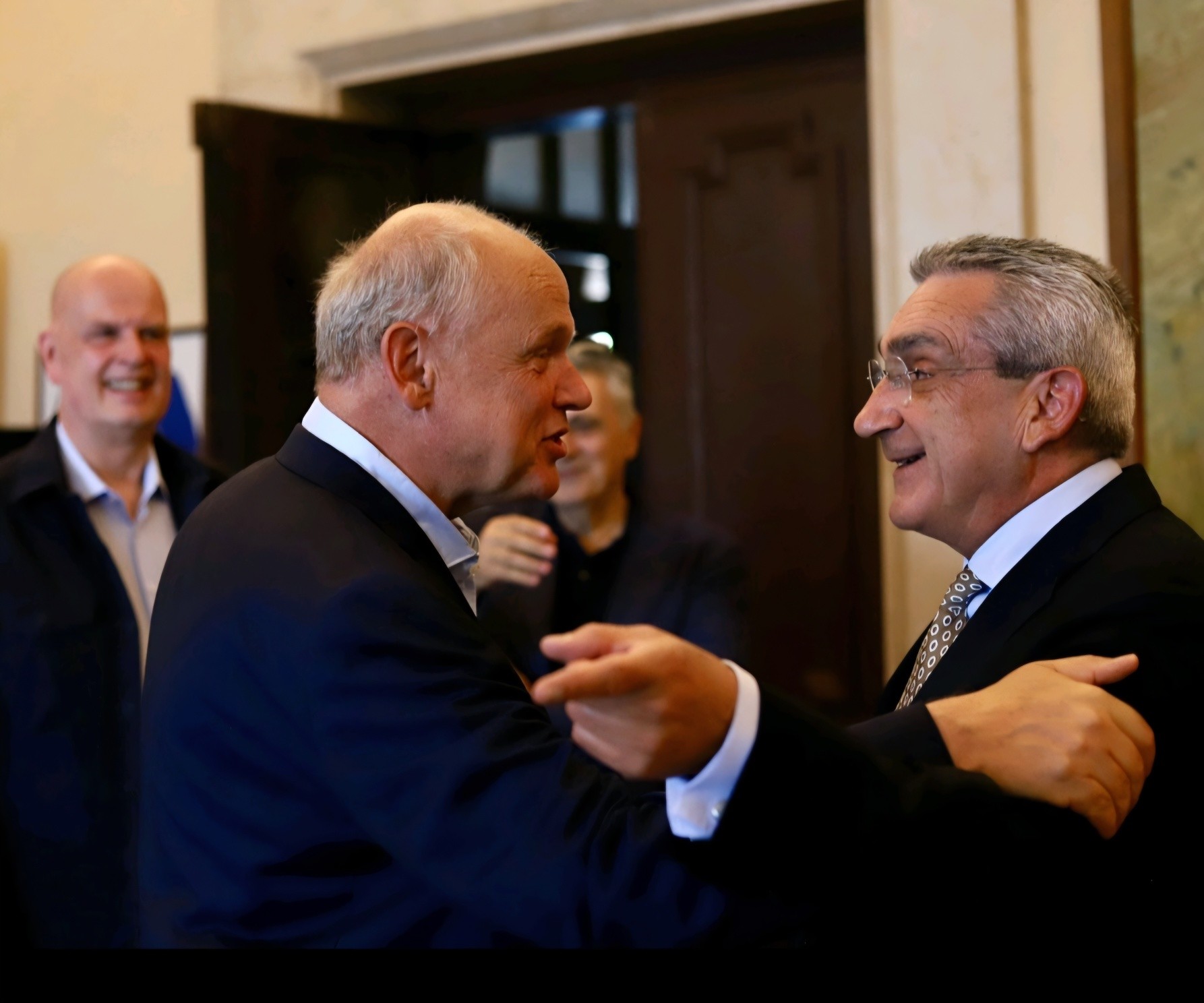
The President and CEO of the TUI Group, Sebastian Ebel, visited Rhodes, holding a series of meetings with senior executives of the group as well as with the South Aegean Region, with the main focus on the progress and results of the sustainable development programme “The Rhodes Co-Lab.” The implementation of the programme was reviewed during a meeting with the Governor of the South Aegean Region, Giorgos Ηatzimarkos.


More specifically, from vision to action and from planning to measurable results, the “Rhodes Co-Lab Sustainable Destination” (TRCL), the global initiative that aims to establish Rhodes as the first international benchmark for a sustainable tourism destination, confirms its steady course of implementation.


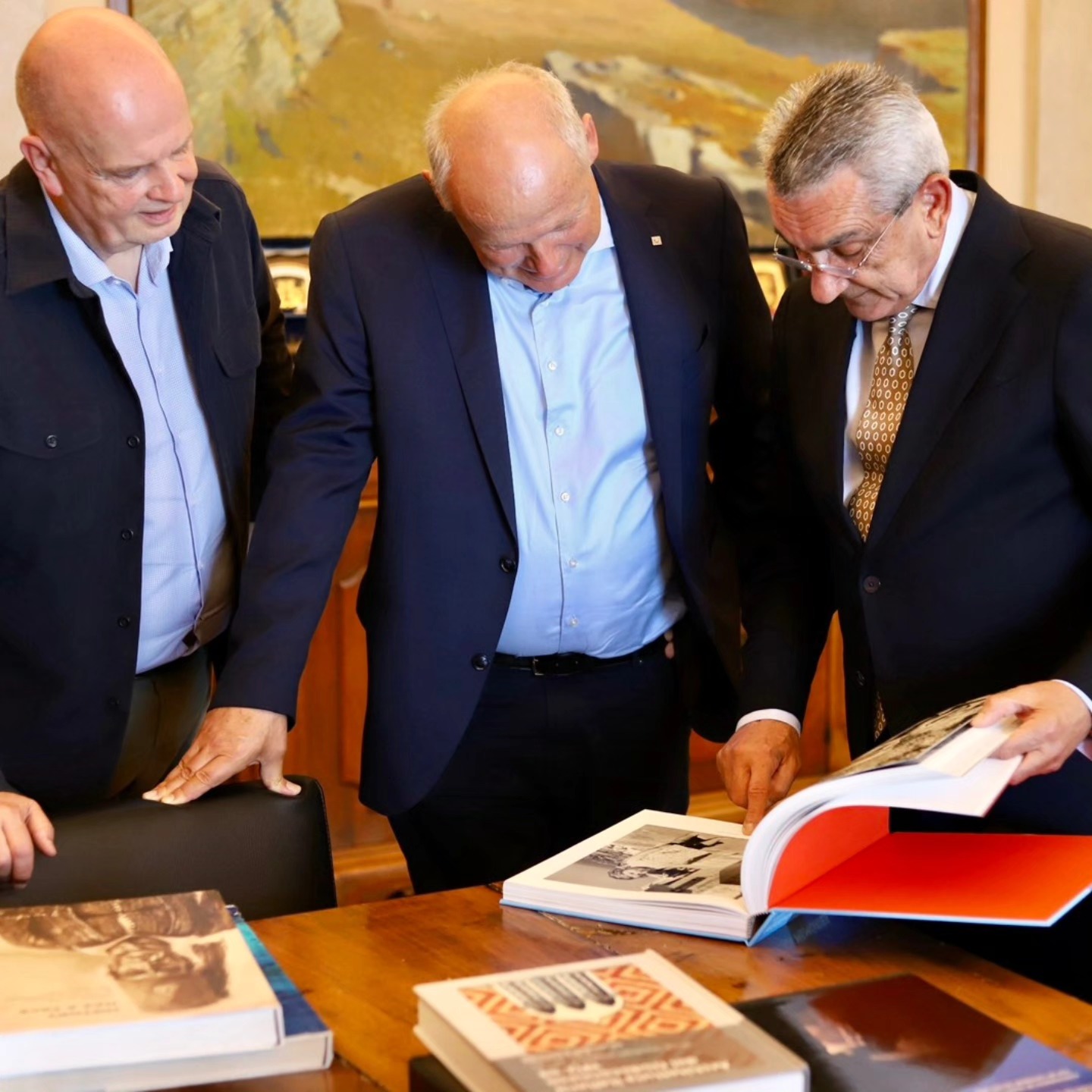
This was confirmed during the visit to the island by the CEO of the TUI Group, Sebastian Ebel, and the Chairman of the TUI Care Foundation, Thomas Ellerbeck, in their meeting with the Governor of the South Aegean Region, Giorgos Hatzimarkos.
The meeting was attended by the Deputy Regional Governor, Apostolos Asprakis, the Deputy Regional Governor for Culture, Christos Michalakis, as well as the Project Director, Angeliki Chondromatidou, accompanied by the joint project management team: Inga Meyer (Project Manager on behalf of TUI), Cheryl Novak (Sustainability Advisor), Vangelis Georgiou (Coordination Manager), and Vasia Papailia (Communications Manager).

The exclusive focus of this expanded working session was the evaluation and acceleration of flagship actions that are currently in full implementation.
The first phase of the project, within 2026, foresees the installation of 20 to 25 charging stations for electric vehicles and two-wheelers, laying the foundations for a radical transformation of mobility on the island.
The Regional Governor briefed TUI’s leadership on the impressive progress of the household composting programme implemented by the South Aegean Regional Waste Management Authority (FODSA), the largest such programme currently underway in Greece:
- 7,810 home composting units have already been distributed.
- Target for the next three months: one-third of Rhodes’ population to adopt home composting.

 At the same time, the effort to reduce the environmental footprint is also extending into the hotel sector. In particular, FODSA is conducting a data collection survey on organic waste from 20 hotels on the island over a five-month period, which will serve as a “guide” for targeted interventions in the circular economy.
The TRCL will soon acquire its own dedicated physical reference space. Construction work on its exhibition area (Showroom) is progressing as planned, creating an interactive exhibition space where residents and visitors will experience the island’s “green” future across aviation, cruise tourism, hospitality, and energy.
The discussion covered the full spectrum of sustainable development, highlighting projects with a strong impact on the local community:
- TUI Field to Fork: The programme that connects local agricultural production with hotels in Rhodes, training producers in regenerative agriculture. The Region expressed its clear intention to expand the initiative.
- Sustainable Beach Vlycha: The transformation of Vlycha Beach into Greece’s first certified sustainable beach, based on a three-year plan and with the potential to replicate the model in other beaches.
- TUI Forest: The creation of a model forest in the area of the Monastery of Panagia Ypseni, in cooperation with the “For Nature” organisation, as a strong symbol of environmental regeneration and resilience.
The two sides did not focus only on ongoing projects but also laid the groundwork for the next wave of initiatives, exploring, for example, plans for recycling at Rhodes Airport and the expansion of electric mobility in rental vehicles.
The Governor of the South Aegean Region, Giorgos Hatzimarkos, stated: “The ‘The Rhodes Co-Lab’ is tangible proof of what public–private cooperation can achieve when there are shared principles and a common commitment. We have the honour of working with a global leader in tourism, a partnership that fills us with both responsibility and pride. From the very beginning, the initiative was highly ambitious. Today, it is extremely encouraging to see the transition from ambition to reality, from planning to concrete projects and measurable results. In an international environment full of challenges, Rhodes continues to move forward with steady and hopeful steps toward the future.”
The CEO of the TUI Group, Sebastian Ebel, stated: “TUI’s sustainability strategy is delivering tangible results. Beyond being an environmental necessity, sustainability is increasingly becoming an economic opportunity. In Rhodes in particular, it is clear that the use of solar energy, the rational management of water resources, and innovative mobility solutions are creating significant benefits for visitors, employees, and the local community. Rhodes is doing an excellent job in this area and, despite the highly challenging international environment, is recording strong demand combined with impressive service quality.”
An expanding alliance: PPC becomes strategic partner in green mobility
The meeting highlighted TRCL’s ability to attract top-tier partners. Central focus was placed on the entry of PPC as a new strategic partner in the project. The partnership between the Region, PPC, TUI Group, and market stakeholders is now taking concrete form, with plans for the first integrated electric mobility network in Rhodes.
During his visit, the head of Europe’s largest tourism group also had the opportunity to meet TUI employees working both in the group’s airline operations and in TUI Musement destination services in Rhodes.
In a social media post, Sebastian Ebel referred to his experience on the island, highlighting the importance of TUI’s human resources.
“Every flight is different, and our cabin and cockpit crews always manage to respond with a smile,” he noted, while also thanking TUI Musement employees in Rhodes for their support to the group’s customers and their social awareness.
Results of the Rhodes Co-Lab
According to the Governor of the South Aegean Region, the programme has already delivered significant actions across multiple sectors.

These include:
- The creation of the first Sustainable Beach in Vlycha.
- The “Field to Fork” programme, which directly connects local producers with hotels.
- The “Aegean Skills” training programme, implemented in cooperation with the University of the Aegean, aimed at education and upskilling of the workforce.
- The household composting initiative in collaboration with the South Aegean Regional Waste Management Authority (FODSA).
Special reference was made to the composting programme, as data presented show that 7,810 households in Rhodes are already actively participating, while by autumn it is estimated that around one-third of the island’s population will have joined the initiative.
From the TUI Forest to the electric charging network
Significant progress has also been recorded in the “TUI Forest” programme, which involves the creation of a new olive grove in an area affected by devastating wildfires in previous years.
At the same time, progress was presented on the plan to develop an extensive network of electric vehicle charging stations across Rhodes.
The project is being implemented with the participation of PPC (DEI), which is now actively joining the programme, strengthening public–private cooperation for the island’s transition to a more sustainable development model.
“Another major player has come on board this wonderful journey, and this new partnership with PPC makes us even more optimistic and stronger,” the Regional Governor stated.
Rhodes as an international model of a sustainable destination

Giorgos Hatzimarkos underlined that the cooperation with the TUI Group and the TUI Care Foundation is based on the pooling of strengths, knowledge, and experience, with the shared goal of creating a new model of tourism development.
As he noted, the Rhodes Co-Lab demonstrates that tourism can act as a force for positive change, strengthening the local economy, social cohesion, employment, and environmental protection.
“The largest tour operator in Europe and a Region with a vibrant economy driven by tourism have joined forces, energy, and ideas. For tourism that serves as a force for good, providing income, jobs, and optimism to society,” he stated.
The meeting confirmed the commitment of all parties involved to continue developing the Rhodes Co-Lab, with the aim of establishing Rhodes as one of the most recognised international examples of a sustainable tourism destination.