Greece remains one of the world’s most sought-after travel destinations, combining history, dramatic landscapes, and a rich cultural heritage. In a recent article, Condé Nast Traveler presents a list of the top places to visit in the country, curated by editor Katie Silcox, who is based in Athens. The list includes archaeological sites, cities, islands, and natural landscapes that showcase the wide variety of experiences Greece offers travelers.


According to the publication, although the Greek islands receive most of the attention during summer—particularly destinations such as Santorini, Mykonos, and Crete—the country offers far more than sun, sea, and beaches. Mainland Greece is home to remarkable cities, historic monuments, and impressive natural landscapes, while visiting during the off-season allows travelers to experience many destinations without the crowds of peak summer months.



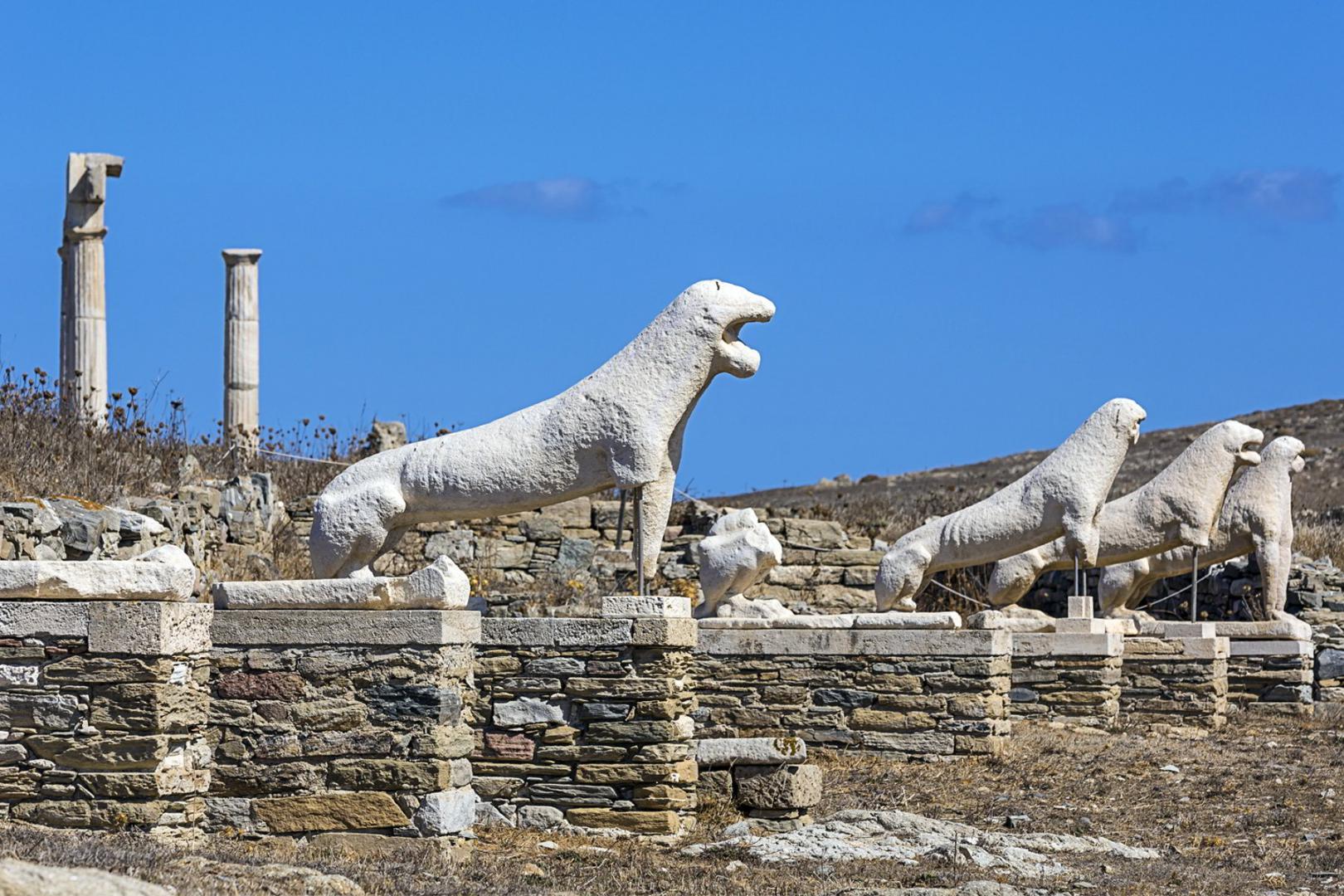
Among the destinations highlighted is Delos, a small uninhabited island near Mykonos and one of the most important archaeological sites in Greece, protected by UNESCO. Delos has been inhabited since around 3000 BC and, according to Greek mythology, was the birthplace of Apollo and Artemis. Visitors can explore well-preserved ruins including temples, residential houses, a theater, and the famous Terrace of the Lions.


Athens is also described as an essential stop for any visitor to Greece. The Acropolis and the Parthenon remain the city’s most iconic landmarks, while nearby sites such as the Ancient Agora, Roman Agora, Hadrian’s Gate, and the Panathenaic Stadium—which hosted the first modern Olympic Games in 1896—offer further insight into the country’s history. Beyond the ancient monuments, the city’s modern character is reflected in its café culture and vibrant rooftop bars overlooking the Acropolis.
The list also includes Nafplio, the first capital of modern Greece, known for the impressive Palamidi Fortress, which can be reached via 857 steps, as well as Bourtzi, the Venetian fortress located on a small island in the harbor.
Another destination featured is Meteora, a complex of Byzantine monasteries built atop towering rock formations rising approximately 400 meters above the surrounding plains. Formed millions of years ago through tectonic activity, these dramatic cliffs host monasteries that combine religious history with spectacular panoramic views.
Thessaloniki, Greece’s second-largest city, is highlighted for its cultural diversity and long history. The city’s best-known landmark, the White Tower, once served as a prison but now houses a museum dedicated to Thessaloniki’s past. The waterfront promenade, the statue of Alexander the Great, and the modern sculpture installation “Umbrellas” by Greek artist George Zongolopoulos are among the city’s most recognizable sights. Thessaloniki is also known for its dynamic culinary scene and has been designated a UNESCO City of Gastronomy.
The article also recommends Lake Vouliagmeni, located about 40 minutes from central Athens. This natural thermal lake, formed when the roof of a cave collapsed roughly 2,000 years ago, maintains a constant water temperature throughout the year and is known for the small fish—Garra rufa, often called “doctor fish”—that inhabit its waters.
Other historic sites featured include Ancient Olympia, where the first Olympic Games were held in 776 BC, and Delphi, once considered the spiritual center of the ancient Greek world and home to the Oracle of Apollo.
The list also highlights lesser-known destinations such as the uninhabited island of Poliegos, famous for its turquoise waters and secluded beaches, and the medieval fortress town of Monemvasia, built on a rocky islet connected to the mainland by a narrow causeway.
Among the cultural landmarks recommended is the Ancient Theatre of Epidaurus, renowned for its exceptional acoustics and still used today during the annual Athens Epidaurus Festival.
The natural landscape of Mount Olympus, the highest mountain in Greece at nearly 3,000 meters, is also featured. In Greek mythology, Olympus was believed to be the home of the twelve Olympian gods and today attracts hikers and nature enthusiasts.
The largest Greek island, Crete, is included for its diverse terrain—ranging from mountains and gorges to fertile valleys and sandy beaches—as well as for its historic sites such as the Palace of Knossos, linked to the ancient Minoan civilization.
The list concludes with Mycenae, one of the most important centers of the Mycenaean civilization, and Santorini, whose famous volcanic caldera and iconic white-and-blue architecture continue to make it one of the most photographed destinations in the world.