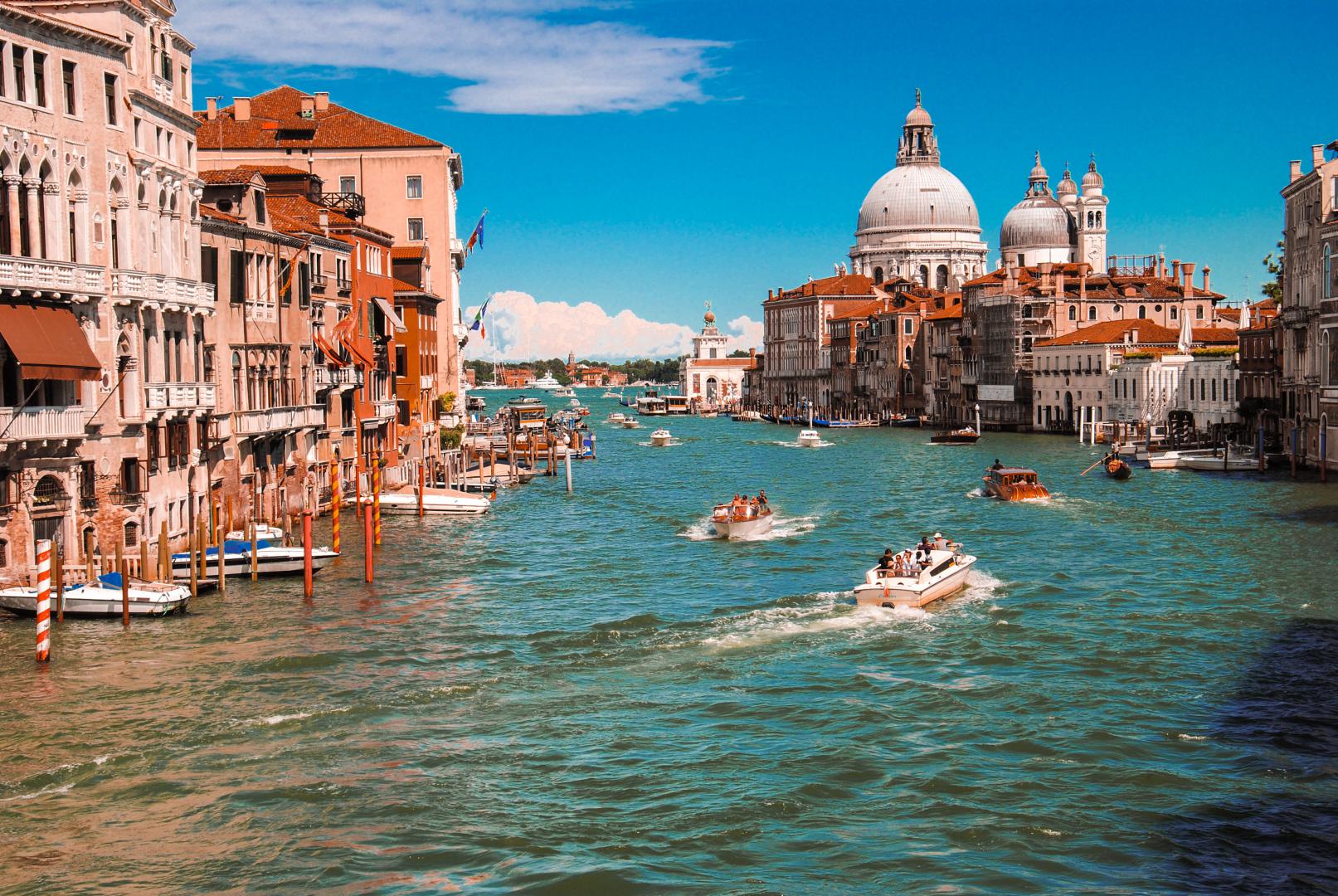
Venice, this world-famous destination, is entering a new era of tourism, in an effort to tackle the phenomenon of over-tourism, with an emphasis on protecting its cultural wealth and enhancing its sustainability. In this context, from 1 July 2025, at St Mark’s Cathedral, a UNESCO World Heritage Site, which receives around 1.8 million visitors every year, visitors will enter the cathedral having made an electronic reservation and, in addition, the price of the entrance ticket will be increased.


In particular, the entrance fee to the church, which includes access to the bell tower, which attracts around 700,000 visitors every year, will rise from 6 to 10 euros. The additional revenue will be used to maintain 40 other churches in Venice, which will remain free to the public, and to repair important religious monuments such as Santa Maria della Salute and the Basilica of Santa Maria Assunta in Torcello.


At the same time, new rules will apply to the number of visitors, as only 500-600 people will be allowed to enter the temple at a time. While access to the Palazzo d’Oro, a masterpiece of Byzantine art, will be even stricter.
Children under 10, groups of pilgrims and people with disabilities will not pay an entrance fee, meaning more people will be able to visit the church.
These measures are intended to reduce the long waiting times for visitors to the church, but also to protect the basilica of St Mark’s, which is the most characteristic example of Italian Byzantine architecture.
Tourism boom in Venice – Large numbers of travellers and new challenges
Venice continues to be one of the most popular tourist destinations in the world, welcoming nearly 5.9 million visitors in 2024, an increase of 3.7% over the previous year. It also set a record of 13.3 million overnight stays, surpassing the previous high of 12.9 million in 2019. This increase demonstrates the city’s “exploding” popularity, but also the huge challenge it poses in terms of managing tourism flows.
Hotels are still a top choice for visitor accommodation, but in 2024 they recorded around 2.9% fewer overnight stays, especially in the more budget categories. This is due to the fact that they face more competition from private Airbnb-type accommodation, which recorded an increase of around 11%, reaching 6.3 million overnight stays. For the first time, in the historic centre of Venice, more nights (4.9 million) were spent in private accommodation than in hotels.
At the same time, a significant increase of 16.1% in overnight stays in private accommodation was recorded in inland areas such as Mestre and Marghera, suggesting that travellers are beginning to choose to stay outside the centre of Venice, relieving the pressure on the historic centre.
Private accommodation now accounts for 33% of all overnight stays, up from 31% in 2023 and 25% in 2019. Hotels account for just over half of demand. The busiest months are May (1.5 million nights) and November (900,000 nights), showing that Venice is popular throughout the year.
Tackling over-tourism
Venice is already implementing measures to address the problems caused by over-tourism, in particular the way it affects the city’s sensitive environment and historic monuments. From August 2021, large cruise ships will not be allowed to enter the city, which has helped to protect sensitive buildings and the lagoon. There is also a general entrance fee for day visitors, which helps to control the flow of tourists on the one hand and fund maintenance projects on the other.
The new rules for St Mark’s Basilica are part of this wider plan, the purpose of which is to encourage ‘quality tourism’, focusing on sustainability and the preservation of the city’s cultural heritage.
By limiting the number of visitors, increasing transparency and using the revenues for the restoration of religious monuments, Venice is trying to find a new balance between the need for economic growth and the preservation of its cultural heritage.