-Strong increase in foreign traffic
-Critical role of Cyprus, stabilizing role of Germany and the Netherlands
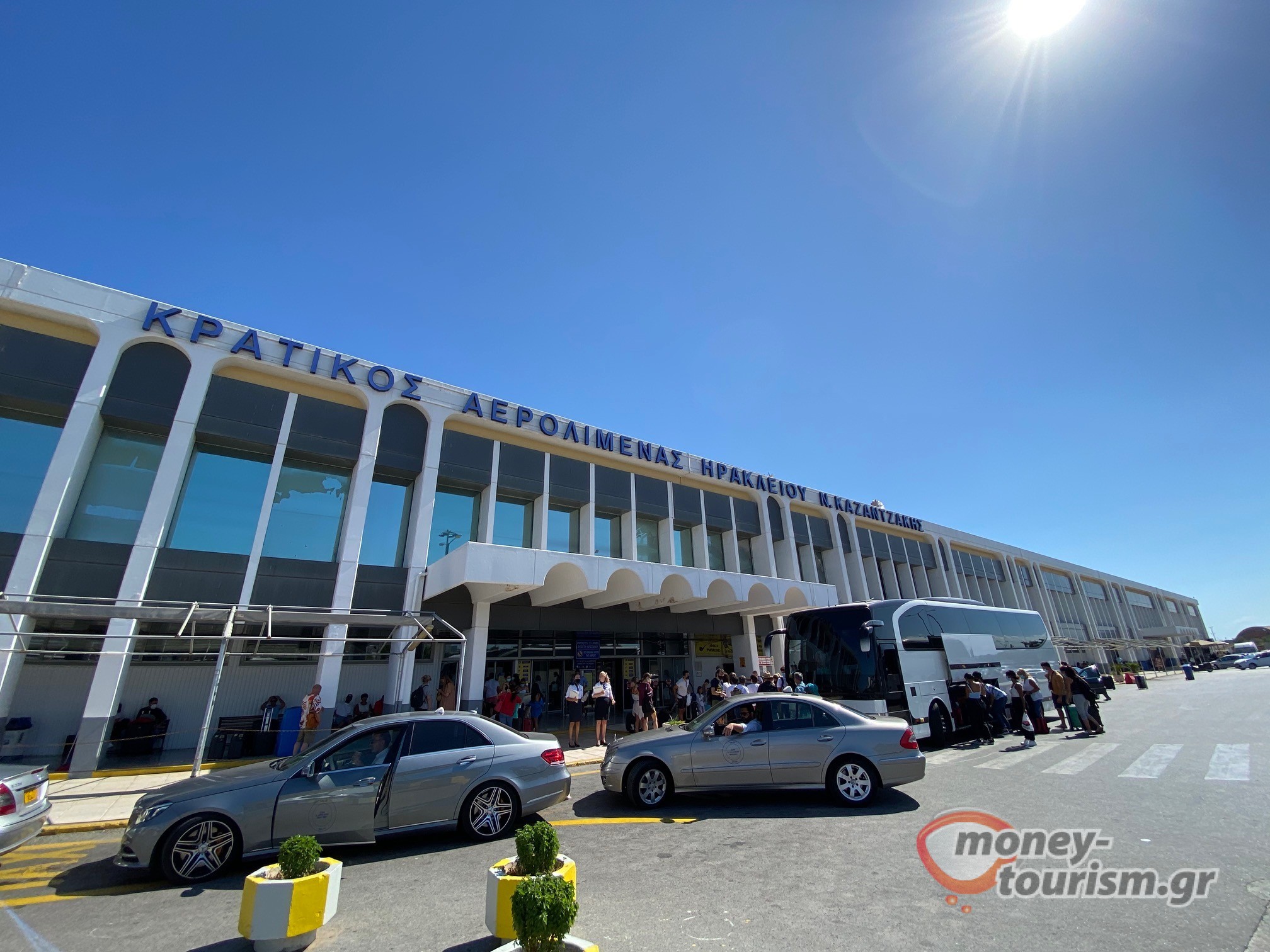
The year 2026 started positively for the Heraklion Airport “N. ” Kazantzakis Airport, which recorded a total of 1,066 aircraft movements, 68,804 arrivals, and 70,189 departures in January — numbers that confirm that Heraklion no longer functions as a purely seasonal airport.


The element that causes the most discussion is the significant increase in international arrivals, but also “who” is producing this increase.
Country-by-country movement
CYPRUS – 1,285 arrivals, 1,367 departures (28 flights)
Cyprus is the ultimate game changer of the month.
20.15% of the total increase in international arrivals comes exclusively from the Heraklion-Larnaca route.
● The flow from/to Cyprus is continuous:
– 1,285 arrivals
– 1,367 departing
– 82 more passengers
In practice, the Cyprus market “behaves” simultaneously as:
✓ foreign purchases in statistics
✓ purchase of “domestic” in the travel profile
✓ a market that functions as a digital and aerial extension of Hellenism.
The new line is already proving to be pivotal. Adding the successful fam trip that took place on the island, it is clear that this connection is here to stay.
ALBANIA – 1,295 arrivals, 1,064 departures (26 flights)
Albania remains a steady source of traffic in the winter; it reflects:
- Regional work commutes
- family flows
- enhanced low-cost connections.
GERMANY – 1,671 arrivals, 1,850 departures (25 flights)
Germany is the most “serious” European market in January.
The Germans clearly show that:
- They now travel to Crete all year round
- take advantage of city breaks & long weekends
- maintain strong VFR flows (visiting friends and relatives)
- support the off-season of Heraklion.
Netherlands – 1,099 arrivals (14 flights)
The Netherlands follow the trend so far: it is the market that is steadily building an off-season presence.
Czech Republic – 492 arrivals (4 flights)
A small number of flights, but high occupancy. Interesting fact:
Czech is not traditionally a winter market for Crete.
Her presence indicates that tour operators are testing new periods.
United Arab Emirates – 187 arrivals (2 flights)
Their presence is small, but it shows that:
- Crete gains access to premium long-haul audience
- the “winter escape” product is enhanced.
Turkey – 397 arrivals (6 flights)
A steady winter market, with mixed flows (work, family, city breaks).
Saudi Arabia – 1 flight – 0 arrivals (possible repositioning/technical flight)
It doesn’t have statistical weight, but it’s significant that there’s a steady air presence from the Gulf.
The Greek market
Greece contributes:
- 62,378 arrivals
- 64,088 departing
- 960 flights (90% of total traffic)
In other words, the interior remains the foundation of the airport — but not because of low demand from abroad; quite the opposite. Demand exists. The infrastructure is insufficient.
Infrastructure
The January project in the corridor reduced traffic. The week of January 19–26 with the works on runway 09/27 proves again the critical point:
- flights were made with smaller aircraft (propeller-driven)
- the movement was artificially reduced
- demand remained high.
The message is clear:
The old airport’s infrastructure has reached its limits.
Every technical intervention is immediately reflected in the flow of tourism.
This makes the new Kastelli Airport even more crucial for the years to come.
Heraklion in its new “12-month aviation”
The overall picture for January shows:
- Heraklion has entered a winter tourism regime,
- Cyprus serves as a key to extending the period,
- Germany and the Netherlands confirm the Western European push,
- Demand is structurally restrained,
- By 2025, 10 million passengers was not the “peak,” but a prelude.