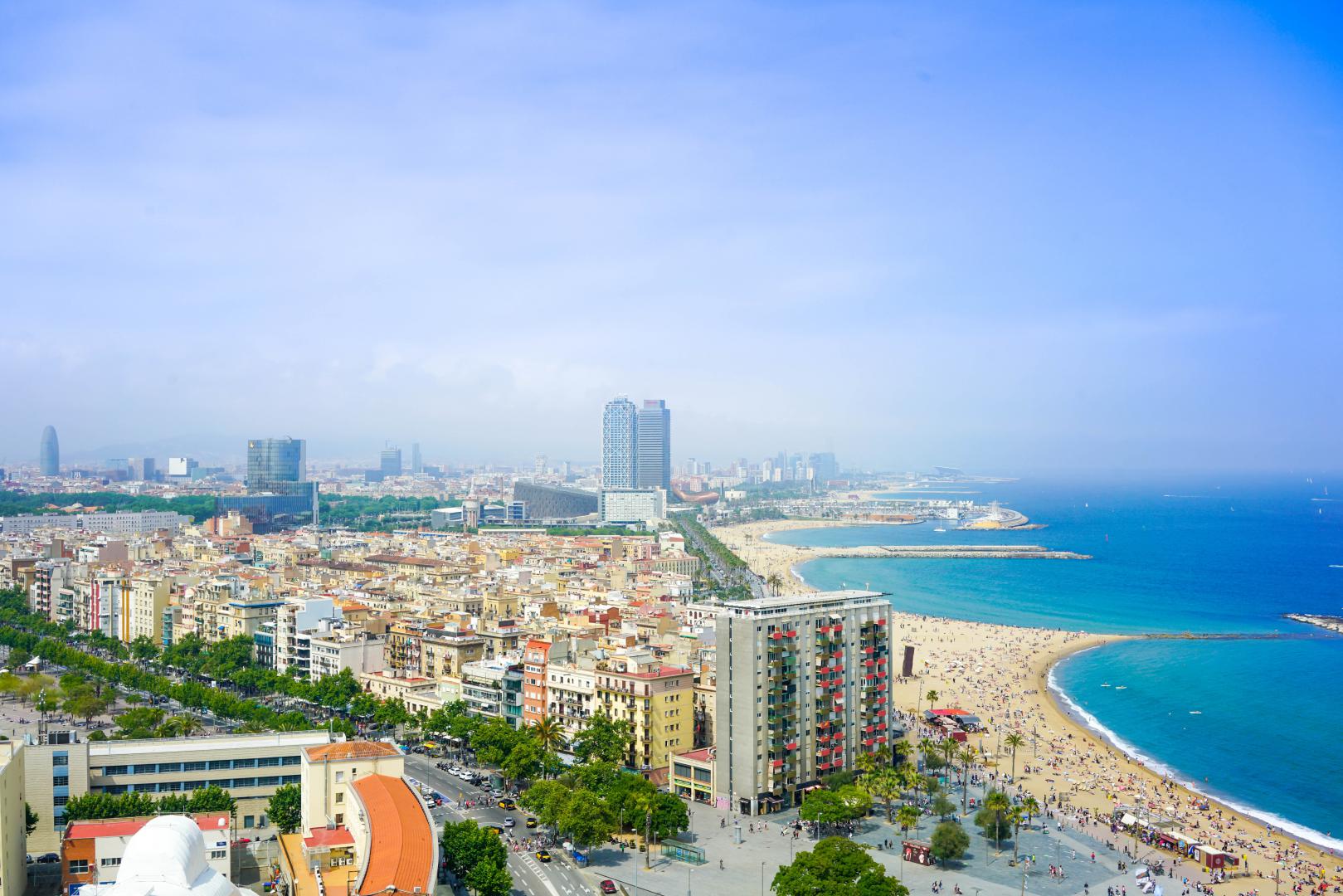
Following the announcement by the Barcelona city council to ban short-term rentals from 2029, interesting facts on the issue are published by data analytics company Mabrian. It highlights, among other things, the phenomenon of the overconcentration of these accommodations in the city center, but also the target group of travelers who choose these accommodations.


According to the Barcelona city council, the ban on short-term rentals will affect 10,101 properties, whose license will not be renewed from the end of 2028, bringing these homes back into the housing market for locals. However, according to Mabrian’s data, this number is higher. More specifically, there are 63% more short-term rental accommodations than those licensed by the municipality, with their total number amounting to over 15,800 accommodations, equivalent to almost 56,700 beds.



This means that the total capacity of short-term rentals in Barcelona represents 67.6% of the city’s total hotel capacity (84,000 hotel beds by the end of 2023, according to the Barcelona Tourism Observatory).
“Properly capturing the market dimension is crucial for policy-making, especially considering that, according to our data, around 1 in 4 rental units in Barcelona does not count towards the mandatory licence for tourist rentals,” explains Carlos Cendra, head of marketing and communications at Mabrian.
According to the data analytics platform, based on data available through Airbnb, about 27% of owners advertise only one vacation rental unit, while about the remaining 73% report more than one property. Interestingly, of this 73% of owners who report more than one property, 57% rent more than 10 properties.
Almost 61% of short-term rentals in Barcelona are referred to as “whole residence”, while 33% are private rooms and 4% are one-room apartments. The breakdown by neighbourhood shows that up to 68% of all short-term rentals are concentrated in the downtown areas of Eixample, Ciutat Vella and Santa-Montjuïc.
According to Mabrian, a key finding to consider when making policy on short-term rental restrictions is the source markets that use this type of accommodation the most.
For example, the Americans, French, Australians and British gather the largest share of demand, “which means that Barcelona is sending clear signals to these incoming markets about a change in their experience when visiting the destination, which should be handled appropriately in each market so as not to discourage visiting or spending rates of key segments of demand, such as families or travellers with longer stays,” says Carlos Cendra.
This finding is particularly important when comparing the cost per night in short-term rentals and hotel rooms: according to Mabrian data for June 2024, on average, the price per guest for a night in a short-term rental accommodation is 56 euros, while an overnight stay in a 3-star hotel costs 167 euros and 175 euros in a 4-star hotel.