Athens and Zante are among the most congested tourist destinations in Europe, according to a new report by Which?, the British consumer association, which highlights, once again, the major issue of over-tourism in Europe.


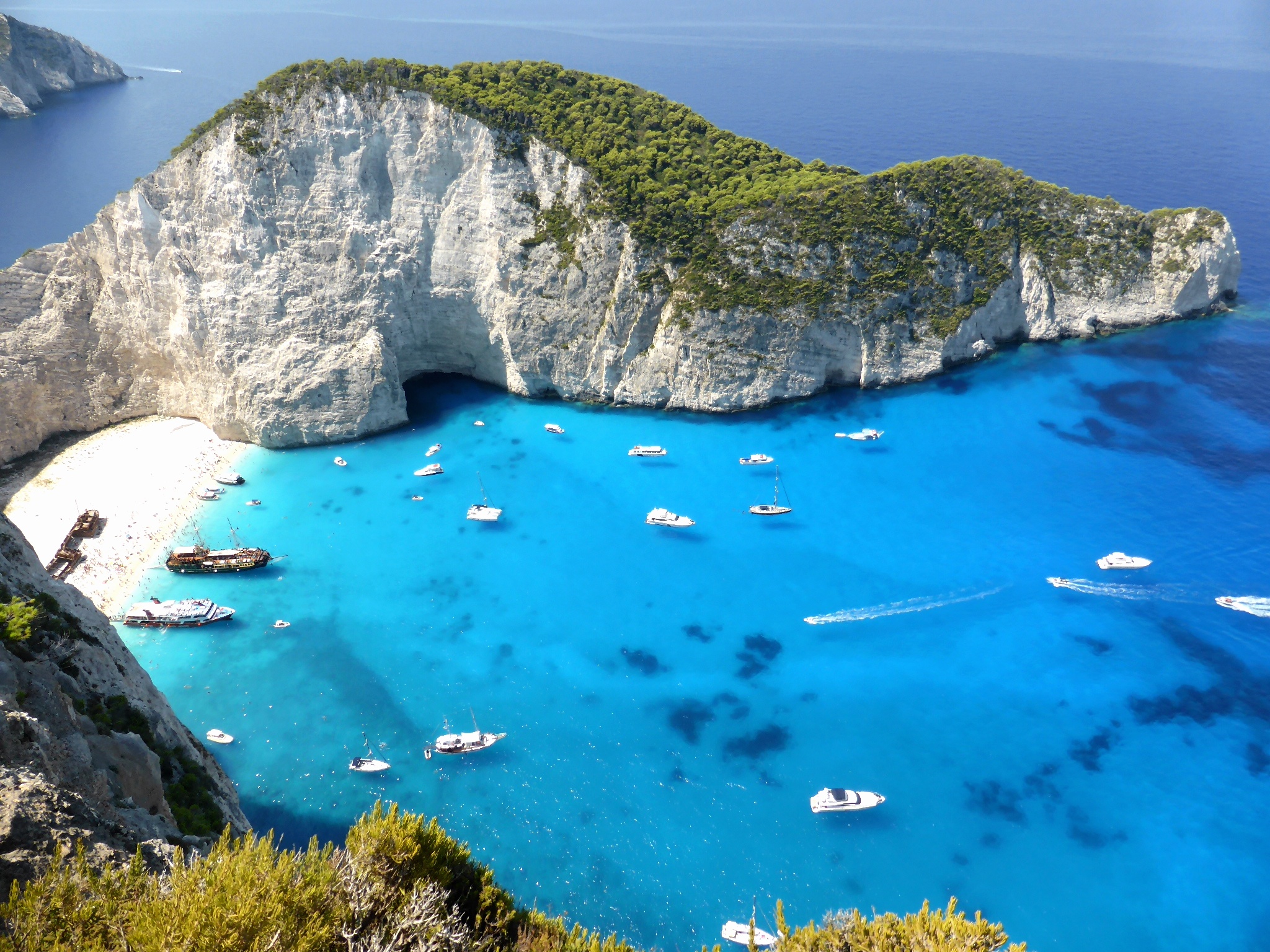
According to the measure of tourist pressure, which looks at the number of overnight stays by tourists compared to the number of permanent residents in an area, Zante is the “capital” of ultra-tourism in Europe, attracting almost 150 tourists for every local in 2023.


At the same time, Athens ranks second among the cities with the most tourists per square kilometre, behind Paris. Specifically, the Greek capital attracted 88,535 more tourists per square kilometre in 2023, while the corresponding figure in Paris was five times higher at 418,280 tourists per square kilometre, according to Which?
However, Majorca recorded the most tourist nights, with more than 51 million in 2023 – more than London, Paris and Rome – at a time when the island’s population was just 966,000. That is, there were 14,064 overnight stays per square kilometre, on average, throughout the year, and 54 overnight stays per inhabitant.
These data prove that the phenomenon of over-tourism is a substantial problem for the popular island, altering its image and making the daily life of the permanent residents more difficult, especially during the summer season, when the tourist burden is even greater.
In response, the local authorities are introducing a new tourist tax of between 1 and 6 euros per night (depending on the season and type of accommodation). It has also proposed a tax of up to 80 euros per car rental.
Most tourists per square kilometre
For cities, with regard to the phenomenon of over-tourism, the number of overnight stays per square kilometre is an important indicator. It records how many tourists are on the streets of the city. Paris, as expected, has by far the most tourists per square kilometre, followed by Athens and Copenhagen.
Many cities and regions have recently introduced tourist taxes and controls on short-term rentals. In Amsterdam, which also appears near the top of the list, you will pay around €22 per night per room on top of the standard hotel rate (12.5%).

The busiest places for tourism are the following:
Mallorca, Spain
The 51 million overnight stays in Mallorca in 2023 show that over-tourism has become a problem, not only in hotspots like Magaluf but all over the island.There were 14,064 overnight stays per square kilometre in 2023 – averaged over the whole year – and 54 overnight stays per inhabitant.
In response, the local government is introducing a new tourist tax of between 1 and 6 euros per night (depending on the season and type of accommodation). It has also proposed a tax of up to €80 per rental on car rental. Some towns, such as the popular Soller, are restricting the access of rental cars to the centre. The simplest answer is to skip holidays here entirely, certainly in July and August.
Zante, Greece
Only about 40,000 people live in Zante. On an island that’s a little bigger than the Isle of Wight, but with better weather, that should leave acres of space for everyone. Yet it had six million overnight stays in 2023, most in the sprawling, noisy resorts along the south coast. If you want a more serene Greek island celebration, choose Kefalonia or Lefkada. Both islands have plenty of tourists, but in our most recent Greek Islands survey they got five and four stars respectively for peace and quiet.
Paris, France
Paris had about 44 million overnight stays in 2023. That’s a huge number with 418,280 overnight stays per square kilometer. You’ll notice this everywhere – from the huge crowds at the Mona Lisa and Eiffel Tower to just getting a dinner reservation somewhere nice. The city’s strategy has been to try to reduce demand by raising prices. Paris raised tourist taxes by almost 200% in 2024. A couple staying in a four-star hotel would now pay a tax of 33.80 euros for two nights (8.45 euros per person per night).
The unpopular destinations
Which? suggests to the travelling public some destinations in Europe that are less crowded, but just as charming as popular ‘overcrowded’ tourist destinations, in order to avoid overcrowding. For example, instead of Paris, he suggests romantic Lille, with the cobbled streets of the medieval old town being just as charming, but much less crowded.
In Spain he suggests Murcia, which attracts around 486 nights per square kilometre, compared with 5,501 in neighbouring Alicante.