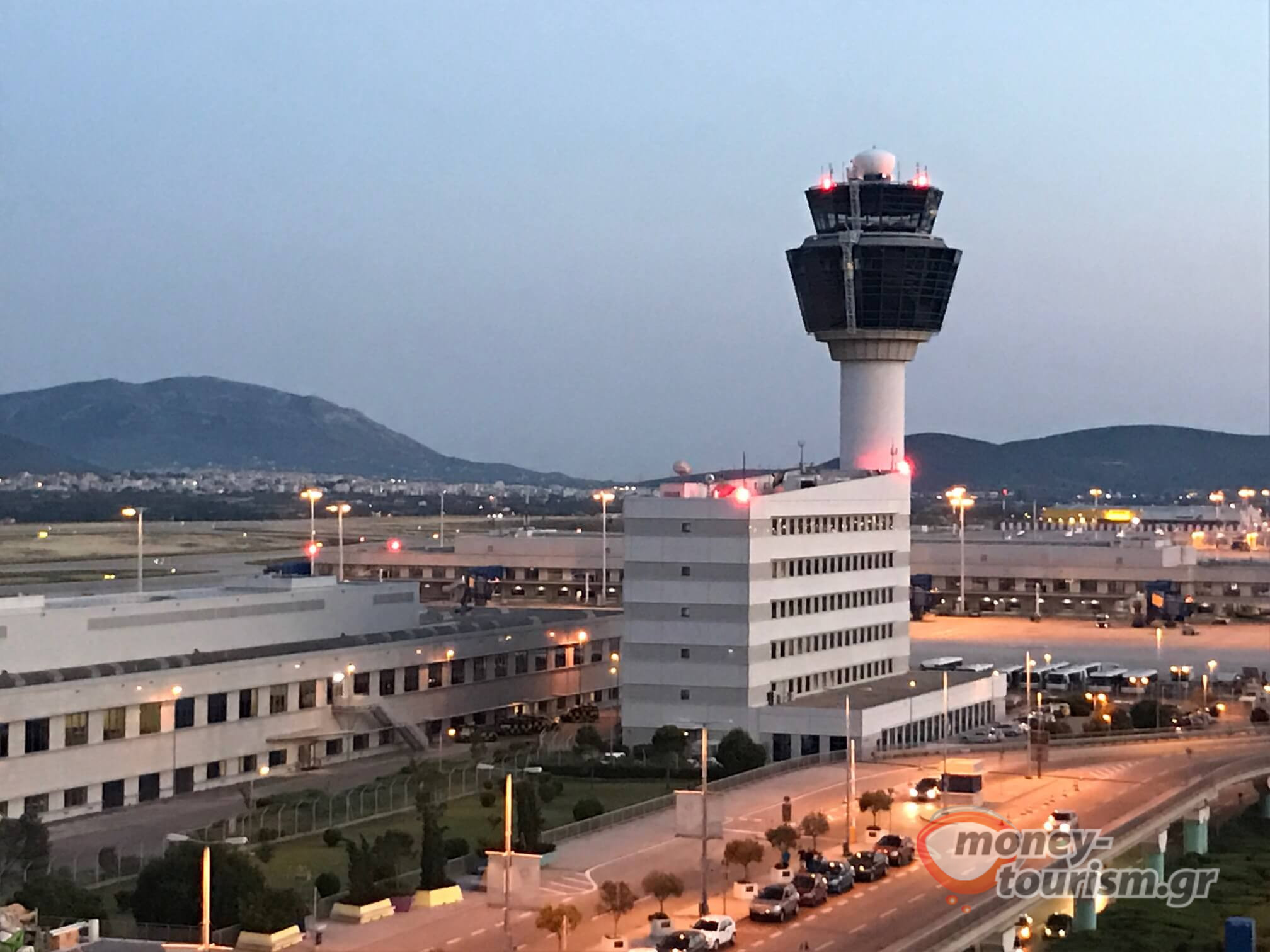
2025 closes for the Athens airport in a way that is hard to find a similar in the European market: a historical passenger performance that touches 34 million travelers, compared to 31.85 million in 2024, an institutional milestone with the change of leadership, and the official start of the most ambitious investment program ever implemented in the facilities of “Eleftherios Venizelos”, with a total value of €1.3 billion.


The focus is on a smooth transition from Yiannis Paraschis – the man who linked the long-term strategic maturation of the airport with stability and technocratic management – to George Kalimmas, one of his closest collaborators and a natural continuation of the philosophy that has defined the course of the AIA over the past two decades.


A few days ago: Athens becomes the first Net Zero airport in Europe
Before the year’s figures were even released, the airport had already made history on a pan-European level. Upon completing the Route 2025 initiative, Eleftherios Venizelos became the first airport in Europe to completely eliminate direct and indirect carbon emissions, achieving something that most European infrastructure is expected to accomplish by 2050.
The view from the plane’s window as it takes off over a vast expanse of solar panels that stretch out like a metallic landscape around the runways, captures the scale of this transition better than any diagram. Behind this view is a 51.5 MWp self-production system, connected to an 82 MWh storage unit, which allows the airport to produce and consume all the electricity it needs, without offsets, without “green papers” and without accounting tricks.

The project was supported by total investments of approximately 70 million euros, a large part of which was funded through the Recovery Fund. The extensive electrification of fleets, the upgrading of building infrastructure, and the complete abolition of natural gas created a new European benchmark, which was presented at a special event with the participation of political leaders, the European Commission, and airline market executives. As European officials pointed out, Athens proved that the transition to Net Zero can be made with real infrastructure, turning a large airport into a hub of energy, technology, and innovation.
Passenger record history and a market that is gaining its own pillars
In this transitional but creative situation, the administration is passing from Giannis Paraschis, a leader who has marked the airport’s course with consistency, stability, and international prestige, to George Kalimmasias, who is not just a successor, but a natural continuation and companion of a common two-decade journey, ready to lead “Eleftherios Venizelos” to the next leap in development.
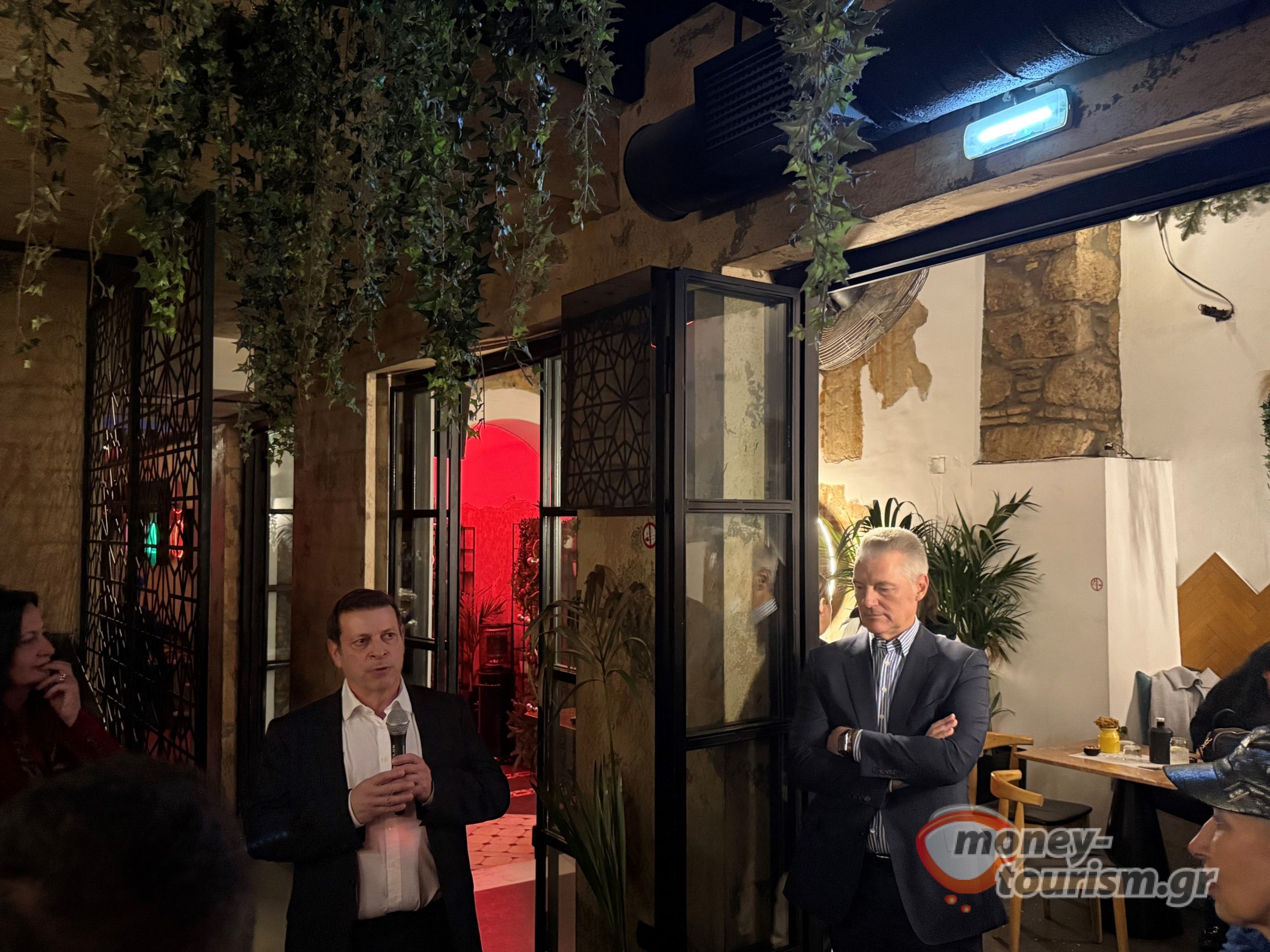
At the information event held yesterday, the management presented the data that reflect one of the most dynamic periods in the airport’s history. Passenger traffic in 2025 is expected to reach record levels, exceeding the expected market trend and further strengthening Athens’ role as the country’s main aviation gateway. This significant increase was contributed not only by the increased number of foreign visitors, but also by the strong reactivation of Greek travelers, who were a stable demand base and an important pillar in the performance of the airport.
Paraschis’s legacy
Giannis Paraschis, having led the organization for many years, gave a report that highlighted both the difficult phases and the periods of strong growth. Among other things, he mentioned projects that marked the functional and environmental upgrading of the airport, such as the completion of the large photovoltaic park, while he reminded that the “El. ” Venizelos” emerged as one of the best airports in its category this year.
He noted that he will remain active in an advisory role, pointing out that the choice of Kalimasi by the shareholders confirms the trust in the team that has built the airport’s course for years. With the phrase “one chapter is completed and a new one begins,” he emphasized the importance of continuity in the organization’s strategy and culture.
The new CEO and the plan for the next day
Taking the floor, George Kallimasias referred to his collaboration with the outgoing CEO, emphasizing that their paths in the organization had been parallel for more than two decades. He described the starting point as “a high level of operational maturity,” emphasizing that the major challenge of the next period is to increase capacity and adapt the airport to the needs of the next decades.
According to him, the tender for the implementation of the expansion project will be announced in the first months of 2026. The construction project involves both the main and satellite stations and provides for a complete transformation of the arrival, departure, and support areas.
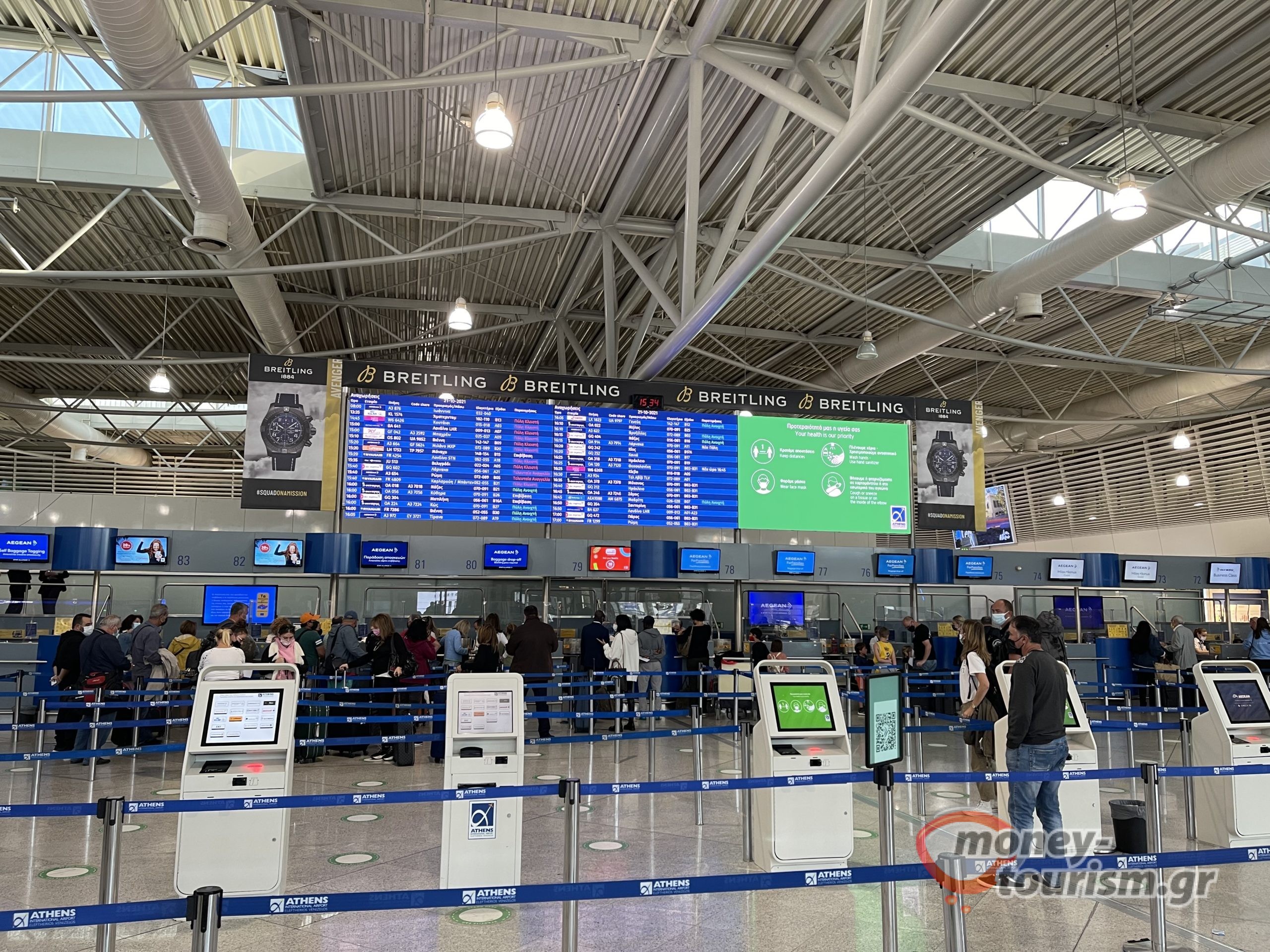
According to the management of AIA, the year ends with a performance that exceeds initial projections: approximately 34 million passengers will pass through the airport gates in 2025, with the increase due not only to tourism, but also to the enhanced presence of Greek travelers. Athens now functions as a hub with its own stable market, while the mobility in city breaks, business trips, and connections to new destinations further enhances its dynamics.
The outgoing CEO, Giannis Paraschis, spoke of a year “with substantial achievements” and an airport that “remains true to the logic that we speak with works.” His continued role in a consultative capacity underscores the importance of continuity, and he is widely regarded as the man who established the modern operating model of AIA.
The largest investment in the airport’s history — 1.3 billion euros by 2032
The investment program unfolding from 2026 onwards is the most ambitious ever implemented at AIA. The total amount reaches €1.3 billion and covers all the works that will lead to an increase in capacity to 40 million passengers by 2032.
Of this amount, the largest part — approximately 1 billion euros — concerns the main work of the passenger station expansion, i.e. the development of the main and satellite air terminal, which will be announced in the coming months. The remaining funds are for accompanying projects, new aircraft parking spaces, upgrading facilities, expanding commercial uses, and preparatory work, which cover the first critical periods until the project is completed.
The new CEO, George Kallimasias, emphasized that he is taking over “a company at an extremely high level of operational and environmental maturity,” stressing that the major challenge is the uninterrupted implementation of projects with the airport fully operational. The impressive detail is that the timeline has been accelerated: the two initial phases of the expansion were consolidated, allowing not only for faster delivery but also for resource savings.
Organic Transition Paraschis-Kallimasias
The administrative transition underway does not resemble a change in administration; it looks more like a continuation of a unified plan. After 25 years of cooperation, the shareholders’ choice of George Kallimasias is considered a vote of confidence in a management philosophy that has proven it can offer resilience, transparency, expertise, and results.
Giannis Paraschis, who now remains in an advisory role, spoke of “a new chapter that begins on the foundations of the previous one,” while shareholders welcomed the continuation of the strategy that established the airport internationally as a model of best practices. Meanwhile, Yannis Paraschis praised the entire administrative team, specifically mentioning Mrs. Ioanna Papadopoulou, Communications and Marketing Director.
Athens: A developing hub, a rising destination
The combination of performance, green investments, and the large construction program makes the Athens airport a strategic infrastructure with a direct impact on the competitiveness of the city and the country. The capital is strengthening its position as a major urban destination, with high demand and an ever-improving operational image.
Eleftherios Venizelos is no longer just an airport. It is a development gateway, an energy hub, an example of technological and environmental innovation, and one of the strongest levers that shape the country’s image in the international environment.
The largest development fund in its history opens in 2026. And for the first time, Athens is not following European developments, but is leading the way.