



The percentage of British travelers who use artificial intelligence (AI) to plan their trips has doubled in the past year, according to a new survey by the British Tourist Agents Association (ABTA).

Of the 2,000 travelers who participated in the survey, one in 12, or 8%, now use AI for inspiration and advice, compared to 4% in 2024.
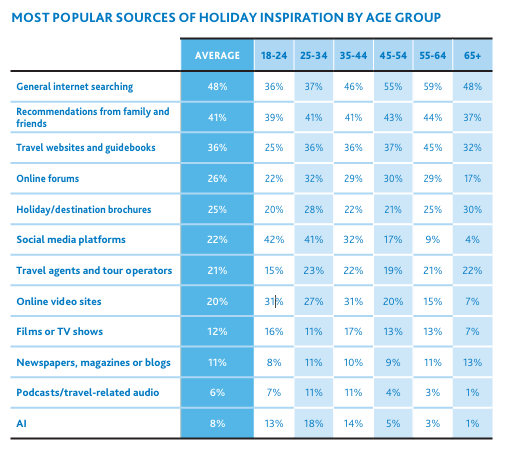
According to the data, travelers between the ages of 25 and 34 are more likely to adopt AI than any other age group, with 18% of them seeking travel through machine learning tools.
However, it is striking that the youngest age group of respondents, aged 18 to 24, do not use artificial intelligence to plan their vacations as much, with only 13% turning to automated sources, while only 3% of those aged 55-64 use artificial intelligence to plan their trips.


AI: Danger or opportunity?
Additionally, 43% of travel consumers say they would feel confident enough to plan their vacation using AI tools, while 38% say they would even book a trip using AI, a process made easier by recent collaborations between OpenAI (ChatGPT) and platforms like Booking.com and Expedia.


The dominance of large online platforms was recognized as a significant future risk factor by the European Travel Commission in a recent report that deals with threats and opportunities. So what do those involved say about the impact of this trend on travel agents and other stakeholders?
For travel agents represented by ABTA, the development of artificial intelligence means finding a balance between the power of artificial intelligence and the benefits of human interaction, according to the organization’s managing director, Mark Tanzer, who said: “The increasing use of artificial intelligence as a source of inspiration for holidays reflects the way behavior is changing. For our industry, the challenge is to harness the potential of artificial intelligence to support our businesses, while continuing to value and promote the personal touch and expertise that a travel agency or tour operator provides.”
The Value of Trust

Meanwhile, speaking at the ABTA conference in Calvia, Spain, Steve Heapy, CEO of airline and travel agent Jet2, noted that companies are now in existential competition with automated bots. “We all need to work harder to justify the margin we want to earn by demonstrating superior product knowledge and offering that expectation and enthusiasm,” he said.
For Neil Swanson, the managing director of TUI in the UK, trust is a key element of the added value that people bring to the equation. “Many of these customers use technology, but they still want to go and look someone in the eye when they make a reservation. They value this element of trust,” he said.













 to plan their trips has doubled in the past year)