Tourism in Europe maintained positive momentum through the end of 2025, with travel demand remaining resilient and international arrivals increasing by approximately 3.2% compared to 2024, while overnight stays increased by 3.1%, according to the European Travel Commission’s European Tourism: Trends & Prospects Q4/2025 report.


The increase in travel activity was accompanied by an even faster rise in visitor spending, which is estimated to have increased by about 9.7% within the year, indicating increased value per trip and a shift to higher-quality experiences.



Demand remained strong throughout the year, with particular resilience in the fall and early winter, while trends such as off-season travel and interest in less crowded destinations strengthened. Traditionally popular countries in Southern Europe continued to attract large numbers of visitors, while destinations in Northern and Central Europe experienced higher growth rates from a lower base.
In the transportation sector, passenger traffic in European airlines increased, with load factors remaining close to 83–84%, while October saw levels above pre-pandemic performance. Meanwhile, the hotel market saw a slight increase in occupancy and a rise in revenue per available room of about 2.1% year-over-year.
The supply of short-term rentals in Europe increased to approximately 5.13 million units by the end of 2025, up 4.4% from a year earlier, while economic factors such as operating costs and prices emerged as a major challenge for the industry.
Intra-European markets of origin
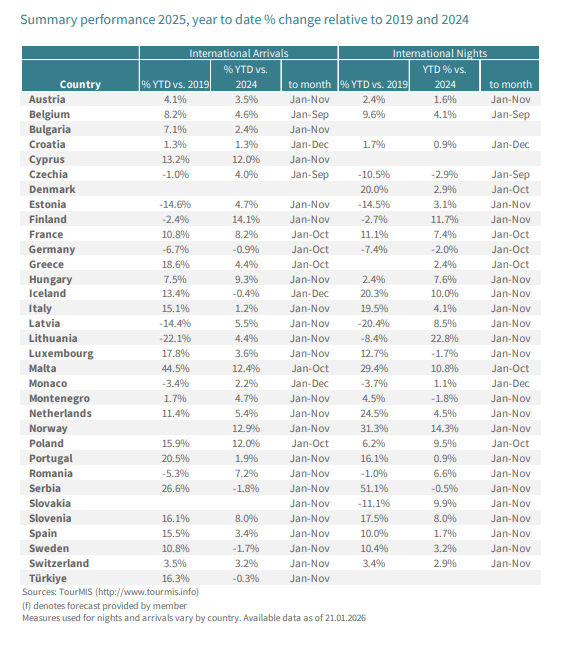
Internal European travel continued to be the main pillar of tourism demand, with the report recording that travel activity between European countries increased during the off-peak period, from September to October and into the winter. The largest annual increases were recorded in smaller destinations such as Slovakia, Estonia, Latvia, and Luxembourg, which, however, represent a smaller share of the total outbound demand.
In larger destinations, such as Spain, the increase was more moderate, and the report states that higher temperatures and increased costs contributed to shorter stays by travelers mainly from Germany, the Netherlands, and Italy. The United Kingdom appears as an exception, as the increase in arrivals and overnight stays was similar, indicating a steady duration of trips.
Price sensitivity remained high, with travelers choosing more affordable destinations or traveling during off-peak periods, while climate conditions appear to be increasingly influencing choices, with increased interest in cooler destinations in Northern Europe.


Analysis by major source markets
United States
Arrivals from the US increased by approximately 5.0% in 2025. The United States accounts for approximately 69.8% of arrivals from the American continent and approximately 36% of long-haul arrivals to Europe, confirming its decisive role in the flows.

Canada
Arrivals from Canada increased by approximately 9.6%, with improved air connectivity boosting demand. The report notes that part of the Canadian demand was directed towards European destinations, while the dynamics vary by country.
China
China remains one of the most important long-haul markets, accounting for approximately 8.2% of arrivals to Europe in 2025. Arrivals increased by approximately 10.8% year-over-year, with the recovery continuing as air connectivity improves and travel procedures are facilitated. The report notes that demand remains below pre-pandemic levels, but continues to strengthen.

Japan
Arrivals from Japan increased by approximately 14.7%, with the country accounting for about 3% of long-haul arrivals. Demand is affected by currency fluctuations and travel costs, and recovery continues.
India
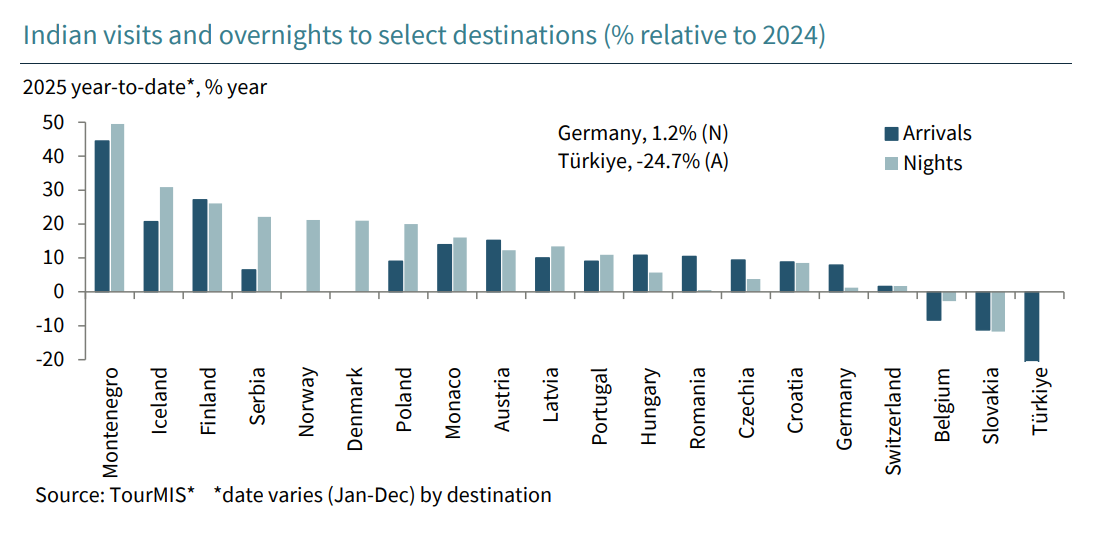
India is recorded as an emerging market, with an increase of approximately 2.7% in arrivals. The report notes the gradual increase in the importance of the Indian market for European tourism.
South Korea and other Asia-Pacific markets
Demand from South Korea was lower than the previous year, while the Asia-Pacific region overall remains important for the recovery of long-haul travel.
Greece
For Greece, international arrivals increased by about 4.4% compared to 2024, while the country is about 18.6% above 2019 levels in terms of tourism activity. The report notes that, as in other Mediterranean destinations, arrivals increased faster than overnight stays, indicating a shorter stay than in the previous year. Greece is among the established destinations that continue to show strong demand and significant participation in the overall travel flows of Europe.
Prospects
The report estimates that international arrivals in Europe will increase by about 6.2% in 2026, with growth largely driven by a boost in long-haul travel, which is expected to increase by about 9%. Enhancing connectivity and improving travel processes is expected to support demand, while economic conditions and costs remain key factors affecting market development.
Source: European Travel Commission — European Tourism: Trends & Prospects Quarterly Report Q4/2025
Source: ETC